
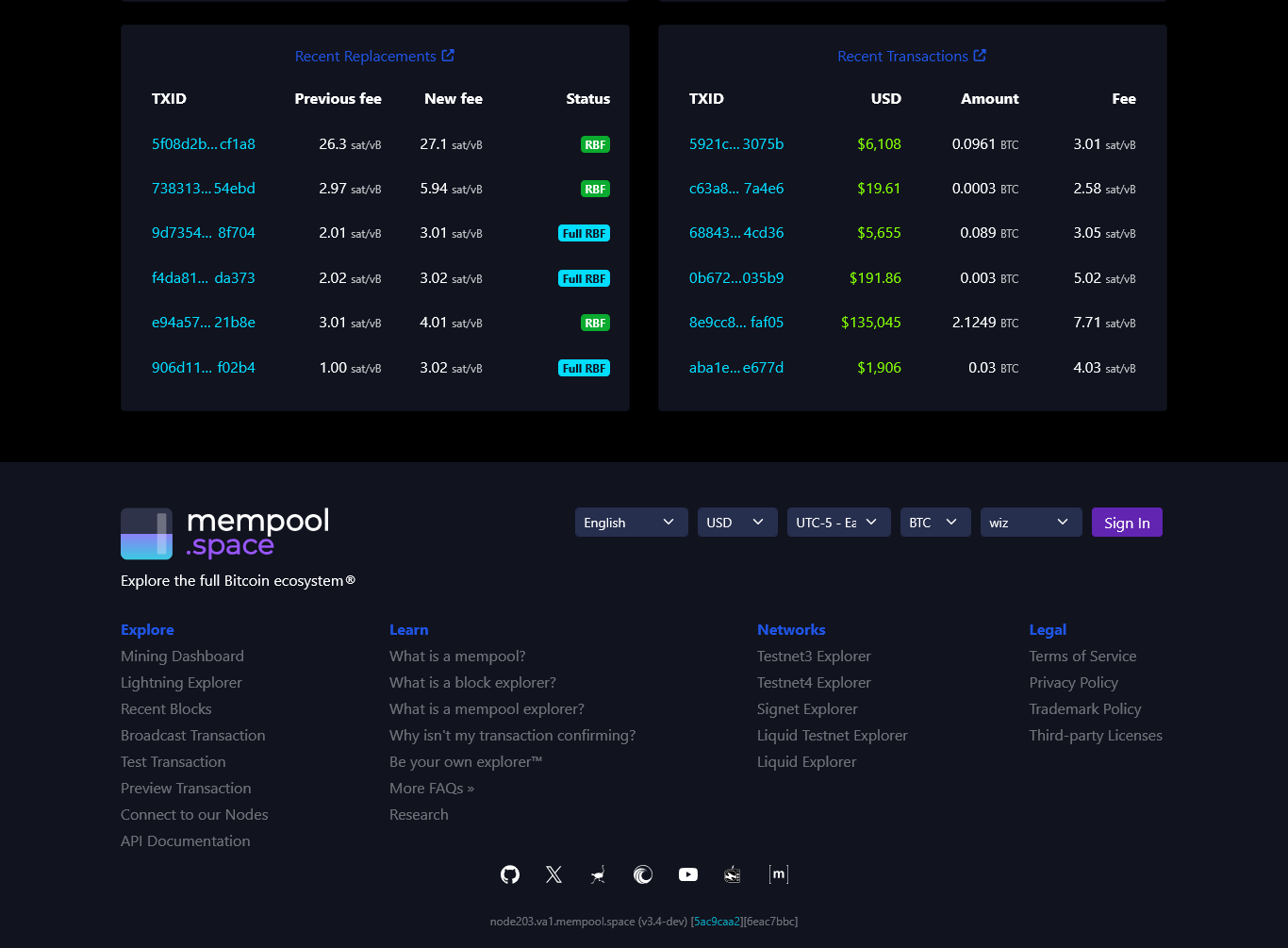
In blockchain networks, the mempool plays a crucial role in how transactions are processed, validated, and eventually added to the ledger. The term is short for “memory pool,” and it refers to a temporary holding area for unconfirmed transactions.
What is the Mempool?
The Mempool is a dynamic data structure maintained by nodes in a blockchain network. When someone broadcasts a transaction—such as sending Bitcoin or interacting with a smart contract on Ethereum—the transaction does not immediately become part of the blockchain.
Instead, it first enters the Mempool, where it waits to be picked up by miners or validators.
Think of it as a waiting room: transactions sit there until they are confirmed and included in a block.
How Transactions Enter and Leave the Mempool ://
1. Transaction creation :/
A user creates a transaction and signs it with their private key.
2. Broadcast to the network :/
The transaction is sent to a node in the blockchain network.
3. Validation by nodes :/
Nodes check basic rules (valid signature, sufficient funds, correct format). If valid, the transaction enters the mempool.
4. Selection by miners/validators :/
Miners (in proof-of-work systems) or validators (in proof-of-stake systems) choose transactions from the mempool to include in the next block.
5. Confirmation and removal :/
Once a transaction is included in a block and confirmed, it is removed from the mempool.
Why the Mempool Matters //
The Mempool is more than just a queue—it directly influences user experience and network performance.
1. Transaction Fees and Prioritization :/
Transactions with higher fees are typically processed faster. Miners or validators prioritize them because they earn more rewards.
When the Mempool is congested, users may need to pay higher fees to get faster confirmation.
2. Network Congestion Indicator :/
A growing Mempool usually signals that the network is busy. This can lead to:
1. Slower confirmation times 2. Higher transaction fees
3. Increased competition for block space
3. Fairness and Ordering :/
The mempool does not enforce a single global order. Instead, each node maintains its own version, meaning transaction ordering can vary slightly across the network until confirmation.
Mempool in Different Blockchain Systems //
. Bitcoin: In Bitcoin, the Mempool is heavily fee-driven. Transactions compete primarily based on satoshis per byte. During high demand periods, the Mempool can grow significantly, causing delays and fee spikes.
. Ethereum: In Ethereum, the Mempool also exists but interacts with gas pricing. Users specify a gas fee, and validators prioritize transactions based on profitability and execution constraints.
Common Misconceptions //
“Once a transaction is in the mempool, it is confirmed.”
Not true. Mempool status only means the transaction is valid and pending—not finalized.
“All nodes have the same mempool.”
Incorrect. Each node maintains its own mempool, and they can differ based on network propagation and policy rules.
“Transactions stay in the mempool forever.”
Also false. If a transaction remains unconfirmed for too long, it may be dropped from nodes’ mempools.
Challenges and Limitations //
The Mempool is essential but not perfect. Some challenges include:
1. Memory limits: Nodes cannot store unlimited unconfirmed transactions.
2. Propagation delays: Transactions may reach different nodes at different times.
3. Fee estimation uncertainty: Users may overpay or underpay due to fluctuating conditions.
4. Spam resistance: Low-fee spam transactions can clog the Mempool in busy periods.
Conclusion ://
The Mempool is a foundational component of blockchain architecture, acting as the staging area where transactions wait before becoming permanent parts of the ledger. Whether in Bitcoin’s fee-driven environment or Ethereum’s gas-based system, understanding the Mempool helps explain transaction delays, fee spikes, and overall network behavior.
It is one of the key mechanisms that keeps decentralized systems functioning without a central scheduler, balancing efficiency, fairness, and security.

Offline Website Creator